Troye Sivan Announced His Fourth Album for October
6 min read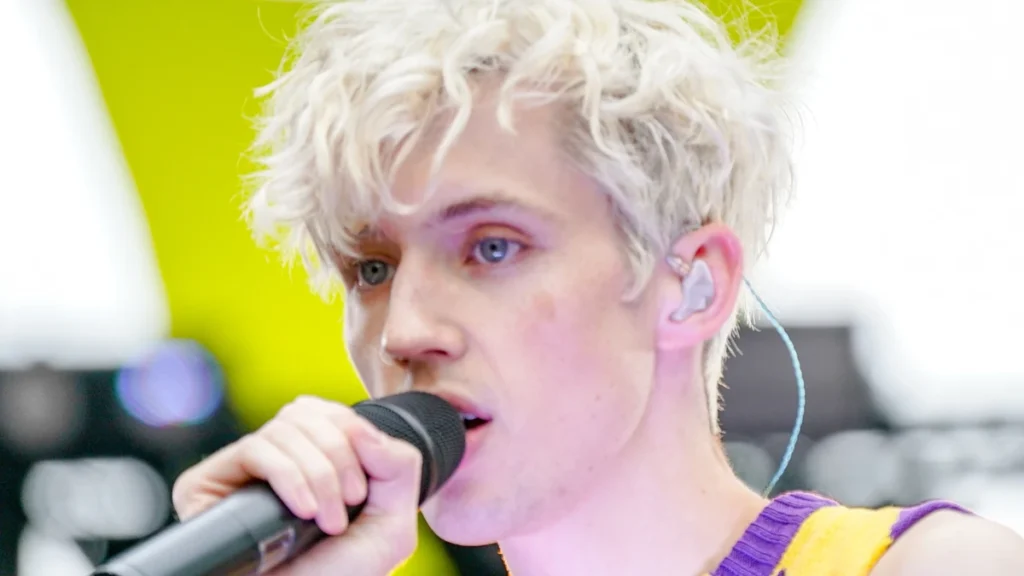
Troye Sivan performing at Capital Pride in Washington.
Troye Sivan performing at Capital Pride in Washington.
Troye Sivan has announced his fourth studio album, She’s the Best, for 9 October through Interscope. The title track arrived as the lead single on 14 August.
The subject of that song is unusually specific for a pop lead single: the influence of women on his life and creative identity, and particularly of trans women, drag performers and feminine-presenting people.
A Lead Single With an Argument
Pop lead singles are usually chosen for immediacy rather than for what they are about, and most say very little that could not be said by anyone.
Choosing a track built around a specific idea about influence and lineage is a different play. It tells the audience what the album is for before they have heard any of it.
It also sets a frame that the rest of the record has to live inside, which is a constraint most artists avoid taking on this early.
The Writing Credits Are a Map
The song was written by Sivan with Leland, George Daniel, Jack Antonoff and Styalz Fuego, with production from Daniel, Antonoff, Fuego and Sivan himself.
Leland has been one of Sivan’s most consistent collaborators and has spent years writing for and around queer pop. George Daniel comes from a British indie background and has increasingly worked as a producer for pop artists.
Jack Antonoff needs no introduction in this context, having produced a substantial portion of the last decade’s most successful pop records.
Four writers and four producers on one track is a lot of hands. It usually indicates a song built in stages rather than written in a room, which is standard practice at this level.
Nicole Kidman Is in the Video
The video features Nicole Kidman alongside drag performer Sasha Colby and Sivan’s sister Sage.
Casting an actor of Kidman’s standing in a pop video is a significant get, and the shared Australian background is presumably part of why it happened.
Placing her alongside a drag performer and a family member is the more interesting choice. It builds the video around the same idea as the song: different kinds of women, all formative.
Sasha Colby’s Presence Is the Point
Sasha Colby is one of the most prominent drag performers working and a trans woman, which makes her casting a literal illustration of the song’s subject rather than a decorative one.
A track about the influence of trans women and drag on a gay pop artist’s identity that then features a trans drag performer is doing what it says.
Pop has a long and frequently unacknowledged history of borrowing from drag and ballroom culture without crediting it. Naming the debt explicitly is a departure from that pattern.
A Record Built to Be Looked At
Sivan has described the project as intended to work visually as well as musically, which is a claim most pop artists make and few structure around.
His previous album ran a coherent visual identity across videos, artwork and live staging, so the statement has a track record behind it.
For a pop artist in the current market, the visual layer is not decoration. It is how a record travels, and treating it as part of the composition rather than as promotion is a meaningful distinction.
Interscope and the Major-Label Machine
The album comes through Interscope, which places it firmly in the mainstream pop apparatus.
That brings radio relationships, playlist leverage and a marketing budget, and it also brings expectations about performance that an independent release does not carry.
An artist making a record explicitly about queer belonging on a major label is a different proposition from one doing so independently, and it says something about where the mainstream now sits.
What the Last Album Established
Something to Give Each Other arrived in 2023 and was received as the record that moved Sivan from a well-regarded pop artist to a defining one.
It was explicitly about gay desire and nightlife, and it did not soften either for a general audience, which is precisely why it worked.
The follow-up therefore has an established position to build on rather than one to establish, which is a better place to make a specific record from.
Two Months Between Single and Album
Releasing the title track in mid-August for an early-October album gives the campaign about eight weeks.
That is a standard modern pop window: long enough to establish the single, short enough that the audience does not lose interest before the record lands.
Leading with the title track rather than a separate single also removes ambiguity. The song and the album are the same statement.
Desire, Identity, Joy, Loneliness
Sivan has listed the album’s themes as desire, identity, joy, loneliness and queer belonging.
Loneliness is the one worth noting. The other four are common in pop, and joy in particular has been the dominant register of recent queer pop.
Including loneliness alongside them suggests the record is not planning to be uniformly celebratory, which is a harder and more interesting position.
Australian Pop’s Current Position
Sivan is one of a small number of Australian artists operating at the top of international pop, and the route there has changed considerably in his career.
Australian acts historically had to relocate and effectively re-establish themselves. The internet removed most of that requirement, and Sivan’s early audience was built online before any label was involved.
That origin still shapes the work. Artists who built their own audience first tend to retain more control over what the records are about.
The Fourth Album Problem
Fourth albums occupy an awkward position. The debut establishes, the second consolidates, the third either breaks through or does not, and the fourth has to justify continuing.
By that point the audience knows what the artist does, and repeating it is safe while changing it is risky.
A record organised around a specific thesis rather than around a sound is one way through, because it gives the album a reason to exist beyond the release schedule.
Where Queer Pop Sits Now
The commercial position of openly queer pop artists has changed substantially over the last decade, to the point where the framing itself now feels dated in some markets.
What has not changed is that specificity still costs something. A record about queer belonging that names drag and trans women directly is narrower than one that gestures at inclusion.
Artists who take that route generally do so because the vaguer version is not worth making, and the audience tends to reward the difference.
Naming Your Influences Out Loud
There is a practical difference between an artist whose work is shaped by drag and ballroom aesthetics and an artist who says so on the lead single. The first is common to the point of being unremarkable in contemporary pop; the second is rare.
The reason it is rare is that acknowledgement invites scrutiny. Once you have named a lineage, the work gets measured against it, and the people who built that lineage are entitled to an opinion about how well you have used it.
Doing it anyway is a bet that credit costs less than the alternative. Pop’s recurring problem with uncredited borrowing has produced a decade of arguments that a single line of acknowledgement would have prevented.
It also functions as a filter on the audience. A record that opens by naming trans women as formative is not trying to be universally palatable, and that narrowing is a choice rather than an accident.
Eight Weeks Is a Short Campaign
Pop albums have historically been announced three to six months ahead, with two or three singles staggered across the run-up to build a base before release week.
Eight weeks and one single is closer to how records worked before streaming, and it depends on an audience that will show up without being warmed for half a year.
The advantage is that the album still feels like an event when it lands. Long campaigns risk the record arriving already familiar, with the strongest three tracks having been available for months.
The risk is the mirror image. With only one song in circulation, the album has to do its own convincing in the first week rather than arriving on momentum somebody else built.
What Is Actually Being Tested
Two things. Whether an album organised around influence and lineage can sustain eleven or twelve tracks, because that is a thesis rather than a mood.
And whether the visual ambition is genuinely integrated or arrives as a set of well-made videos attached to a conventional pop record.
A fourth album, an eight-week campaign, a title track about the women who shaped him, and a video that casts the argument rather than illustrating it.
About The Author