Gustavo Dudamel Took Two Grammys for the Ortiz Work Yanga
6 min read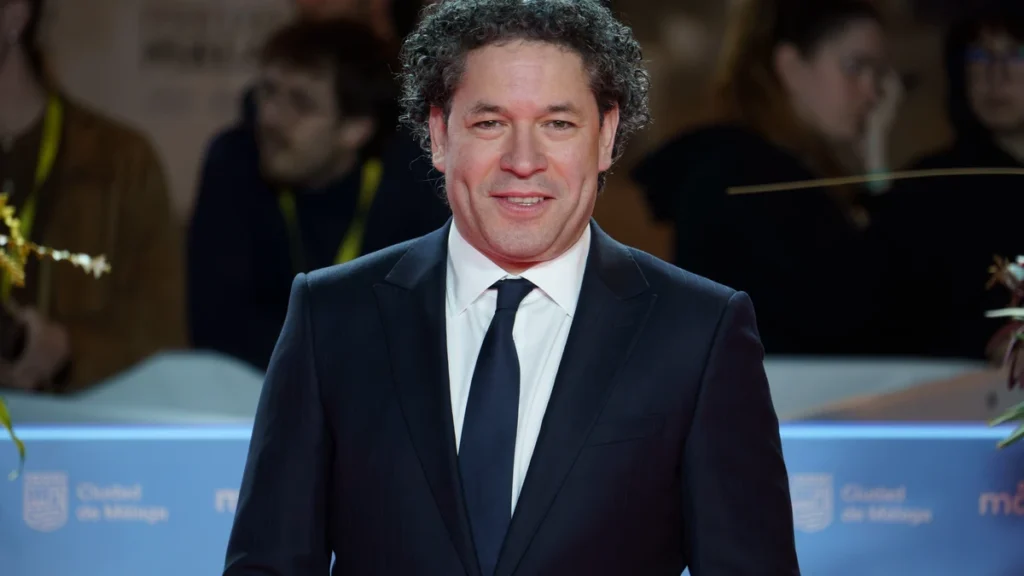
Gustavo Dudamel at the Malaga Film Festival.
Gustavo Dudamel at the Malaga Film Festival.
Gustavo Dudamel and the Los Angeles Philharmonic won Best Classical Compendium at the 68th Grammy Awards for their recording of Gabriela Ortiz’s Yanga.
The same record also took Best Choral Performance, which is a substantial double for a single contemporary work.
What Yanga Is
Yanga is a 2019 composition scored for choir, percussion quartet and orchestra, an unusual combination that puts three distinct forces in play at once.
The Los Angeles Philharmonic commissioned it for its centennial and gave the premiere on 27 October 2019.
Centennial commissions are the largest an orchestra makes, and they tend to go to composers the institution intends to be associated with rather than to safe choices.
The percussion quartet is the element that makes the scoring distinctive. It sits between the orchestra and the choir and does not belong entirely to either.
Who Gaspar Yanga Was
The work takes its subject from Gaspar Yanga, an African-born man who led a community of people who had escaped slavery in early seventeenth-century Mexico.
They resisted Spanish attempts at recapture successfully enough that the colonial authorities eventually negotiated rather than continuing to fight.
The settlement that resulted is generally described as the first free Black community in the Americas, which makes it a foundational and under-taught piece of history.
Why the Subject Suits the Scoring
A story about a community resisting an empire is well served by a choir, because a choir is by definition a collective voice.
Placing that collective against an orchestra sets up a structural opposition before a single note is written.
The percussion quartet then complicates it, providing a rhythmic identity that belongs to neither side and that carries its own cultural reference.
Two Awards for One Record
Winning Best Classical Compendium and Best Choral Performance with the same recording is unusual, because the categories measure different things.
Compendium rewards the album as a whole, including its programming and production. Choral performance rewards the singing specifically.
Taking both means the recording was judged strong at the level of the concept and at the level of the execution, which is a harder combination than one large award.
Ortiz Has Been Winning Repeatedly
Ortiz has now won in consecutive years, having taken awards at the previous ceremony for Revolucion diamantina.
Sustained recognition of that kind is rare for a living composer, and it reflects a body of work rather than a single successful piece.
She won a second award at the same ceremony for Dzonot, which places her at the centre of the contemporary classical field this year.
The Los Angeles Philharmonic’s Commissioning Record
The LA Philharmonic has commissioned new work at a rate almost no other orchestra matches, and that policy is a deliberate institutional position.
Most orchestras programme new music defensively: a short piece before the interval, followed by something the audience came for.
Los Angeles has instead built new work into the centre of its programming, which changes what composers can propose and what audiences expect.
Dudamel’s Broader Position
Dudamel came out of Venezuela’s El Sistema programme and has spent well over a decade as music director in Los Angeles.
He is one of very few conductors with genuine public recognition outside classical audiences, which is a professional asset and a persistent framing problem.
The work that earns awards, however, is the ordinary work: commissioning, rehearsing and recording new pieces that would otherwise not exist.
Recording New Music Is Harder
Recording a contemporary work has none of the advantages of recording standard repertoire.
There is no performance history to draw on, no established interpretation to react against, and often only one prior performance by the same players.
The orchestra is effectively defining how the piece sounds, which is a responsibility that recording a symphony written two centuries ago does not carry.
The Producer’s Award Share
Dmitriy Lipay is credited as producer, and in classical recording the producer credit reflects real authorship of the finished result.
A classical producer decides which takes are used, how a performance is assembled and how a complex score is balanced.
For a piece with choir, percussion quartet and orchestra, that balancing job is genuinely difficult, and the award recognises it explicitly.
Platoon as a Classical Label
The recording was released through Platoon, which is not a traditional classical label and did not exist as one a decade ago.
Its presence in the classical Grammy categories reflects how much recording has moved away from the legacy labels toward artist-led and orchestra-led arrangements.
For an orchestra with its own commissioning programme, controlling the release is a natural extension of controlling the repertoire.
A Second Nomination That Year
Dudamel was also nominated for Best Orchestral Performance for a recording of Ravel’s Bolero with the Simon Bolivar Symphony Orchestra of Venezuela.
Appearing in two categories with two different orchestras is a reminder that he has maintained the Venezuelan relationship alongside the American one.
Bolero is about as far from a centennial commission as orchestral repertoire gets, which says something about the range a music director is expected to cover.
Why Historical Subjects Recur in New Orchestral Music
A large proportion of recent orchestral commissions take historical subjects, and the reason is partly practical.
An orchestral work needs a structure that sustains twenty or forty minutes, and a narrative supplies one where an abstract idea often does not.
The risk is that the music becomes illustration. The pieces that work are the ones where the subject shapes the material rather than merely providing a title.
What a Centennial Commission Is For
An orchestra marking a hundred years has a straightforward choice about how to spend the occasion, and the two options say different things.
The conservative version programmes the canon at its grandest: a Mahler cycle, a Beethoven nine, guest soloists of the highest possible profile. It celebrates the institution by demonstrating that it can still do what it has always done.
The alternative commissions new work, which is a bet rather than a celebration. Most commissions are performed once and never again, so the orchestra is spending its anniversary on something that may not last.
A commission that then wins two Grammys seven years later is the outcome that justifies the policy, and it is rare enough that it becomes an argument other orchestras will cite when defending their own budgets.
Choral Writing and Why It Is Difficult
Writing well for choir is among the harder technical problems in composition, and the reason is that a choir is not an instrument.
Every singer has a different voice, the ensemble’s tuning shifts with the harmony rather than being fixed, and text has to be set in a way that remains audible over an orchestra without the singers forcing.
Amateur and semi-professional choirs, which perform most orchestral choral repertoire, add a further constraint: the writing has to be learnable in a limited rehearsal period by people who are not full-time musicians.
A Best Choral Performance award therefore recognises the composer as much as the singers. Music that makes a choir sound good is music that was written with an understanding of how choirs actually work.
What Is Actually Being Tested
Two things. Whether a centennial commission enters the repertoire or remains a document of one orchestra’s anniversary, which is what happens to most of them.
And whether recognition on this scale changes how often Ortiz’s music is programmed by orchestras that have never played it.
A choir, a percussion quartet, a full orchestra, a seventeenth-century revolt, and two Grammys for the same record.
About The Author