William Basinski Made a Forty-Minute Piano Record for October
6 min read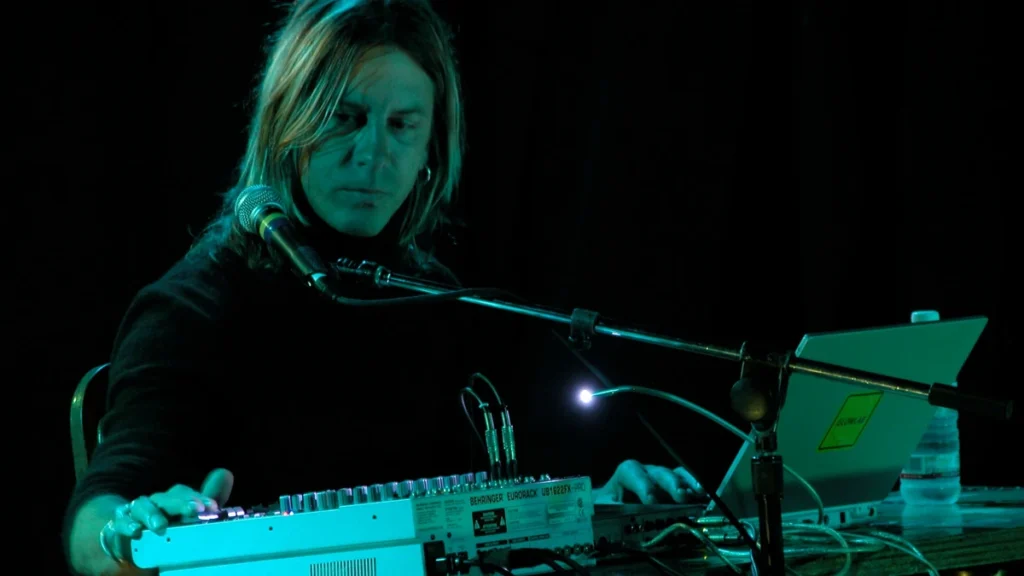
William Basinski performing live.
William Basinski performing live.
William Basinski has announced Passing the Cup of Sorrows for 23 October through Temporary Residence. It is a single unbroken forty-minute piece and his first solo album in six years.
The instrumentation is a solitary piano with subtle electronics underneath, which is a narrower palette than most of his catalogue and a deliberate one.
Where the Title Comes From
Basinski took the phrase from a video describing a spiritual hypnotherapy exercise called passing the cup of sorrows.
The exercise belongs to past-life-regression practice and describes a sacred exchange of energy between two spirits working toward forgiveness.
That is an unusually specific source for an instrumental record, and it gives the piece a shape to follow rather than leaving it as an abstract exercise in duration.
Forty Minutes, One Piece
Releasing a single forty-minute track is a structural decision more than a stylistic one. There are no entry points, no track breaks and nowhere for a playlist to take a fragment.
It forces a listening posture. The record either gets played from the start or it does not get played meaningfully at all.
Basinski has worked at this length repeatedly, and his audience is accustomed to it, which is why the format is a statement of continuity rather than a provocation.
The Morton Feldman Comparison
The announcement invokes Morton Feldman, the twentieth-century American composer whose late works ran for hours and moved at a deliberately restricted pace.
Feldman’s music is built on quiet, on asymmetry and on repetition that never quite repeats, and the comparison tells you what to expect from the piano writing here.
It also places the record in a compositional tradition rather than in ambient electronic music, which is a meaningful distinction for how it should be heard.
Six Years Since the Last Solo Record
Basinski has not released a solo album since 2020, though he has continued to work collaboratively in that period.
Six years is a long gap for a composer with a substantial catalogue, and it usually indicates either a change of method or a wait for the right material.
Announcing a return with a single piece rather than a collection suggests the latter. One idea, developed at length, is not the kind of record that gets assembled from offcuts.
Why Basinski’s Name Carries Weight
Basinski is best known for The Disintegration Loops, a work built from magnetic tape loops that physically degraded as they were transferred to digital.
The decay was not simulated. The tape was genuinely falling apart during the recording, and the piece documents that process as it happened.
That work made him one of the few ambient composers with a genuinely canonical piece, and it is why a new solo record from him is covered as an event rather than as a release.
Tape, Piano and the Same Underlying Idea
Moving from tape loops to solo piano looks like a change of medium, but the underlying preoccupation is consistent.
Basinski’s work has always been about time passing audibly: a sound that changes across a duration long enough for the change itself to become the subject.
A forty-minute piano piece with electronics underneath is another way to do that. The instrument is different; the question being asked is not.
Temporary Residence as a Home
Temporary Residence Limited has released a substantial part of Basinski’s catalogue, and the label occupies a particular position in American independent music.
It has consistently supported long-form, difficult and non-commercial work across three decades, which is a business model that should not survive and repeatedly has.
Labels of that kind operate on catalogue and on a committed physical-buying audience rather than on streaming revenue, which is the only structure under which a single-track forty-minute album makes sense.
A Tour Attached to a Single Piece
An extensive European and North American tour is scheduled for late 2026 to support the release.
Touring a forty-minute piece is a specific proposition. The performance is not a set of songs and there is no obvious place to applaud, which changes the relationship between the room and the stage.
Audiences for this music are used to that, and the growth of the long-form ambient concert over the last decade means there are now venues and promoters set up for it.
Ambient Music’s Awkward Commercial Position
Ambient and long-form composition sit strangely in the streaming economy for reasons that are purely arithmetic.
Payouts are per stream rather than per minute, so a forty-minute piece earns the same as a two-minute one. A genre built on duration is therefore structurally penalised.
The consequence is that artists in this field rely on vinyl, direct sales and live performance, which is exactly the model the announcement describes: a physical release with a pre-order and a substantial tour.
Why Piano and Not Tape
Choosing the piano for a return record is a decision to work with a sound nobody can mistake for a process.
Tape loops carry their method audibly. A listener hears the medium as much as the music, and the decay is part of the content.
A piano is neutral in that sense. The note is just a note, and any sense of erosion has to be composed rather than produced, which is a harder thing to do and a more exposed one.
What a Hypnotherapy Exercise Gives a Composer
The source material matters here because it supplies a structure. The exercise describes an exchange: one spirit passes something to another, and the transfer is the point.
That is a two-part form with a movement between the parts, which is a usable shape for a forty-minute piece that would otherwise have to justify its length through texture alone.
Whether the piece reads that way without the explanation is the interesting question, and it is the one a single-track album with no titles leaves entirely open.
The Long-Form Concert Grew Its Own Audience
Twenty years ago there was almost no infrastructure for a concert consisting of one continuous forty-minute piece performed to a seated or lying audience. The rooms did not exist, the promoters did not book it, and the audience had not been assembled.
That changed gradually through a combination of gallery programming, festival sidebars and a generation of listeners who arrived at ambient music through electronic rather than classical routes. Institutions now commission this work, and dedicated events for it run in most major European cities.
The practical effect is that a composer like Basinski can tour a single piece across two continents without needing to pad the evening with a support act or a shorter opening set.
It also means the record and the performance are genuinely the same object, which is unusual. Most albums are documents of something that gets rearranged for the stage; this one is a score for the show.
Announcing in August for October
A two-month announcement window is standard for a physical release, and the reason is manufacturing rather than marketing. Vinyl pressing runs are booked months ahead, and the pre-order period is what tells the label how large the run should be.
For a release like this, the pre-order is not a promotional device. It is the primary sales event, and a substantial share of the record’s total lifetime sales will happen before anyone has heard the full piece.
That is an unusual amount of trust to ask for, and it only works with an artist whose audience has bought unheard records before and been satisfied.
Landing in late October also puts the release ahead of the tour rather than behind it, so the audiences arriving at the shows will already know the piece.
What Is Actually Being Tested
Two things. Whether a solo piano can sustain forty minutes for an audience that arrived through tape-based work, because the two experiences are not the same.
And whether the Feldman reference is a genuine description or a framing device. Feldman’s music is difficult in a specific way, and invoking it sets a demanding standard.
One instrument, one piece, forty minutes, six years of waiting, and a title borrowed from a practice most listeners will never have heard of.
About The Author