Anthony B JetSki Pairs a Reggae Veteran With Jazzwad
5 min read
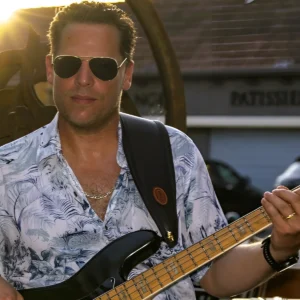
Anthony B performing at Ruhr Reggae Summer in Muelheim.
Anthony B performing at Ruhr Reggae Summer in Muelheim.
Anthony B JetSki is a new single from one of reggae’s most durable working singers, produced by Jazzwad and released through Ineffable Records.
The interesting part is not the release itself but the pairing. Anthony B built his reputation on conscious reggae with a sharp political edge, and a track called “JetSki” is not what that catalogue prepares you for.
Thirty Years of Continuous Output
Anthony B has been recording for more than three decades, which places him among a small group of Jamaican artists who came up in the nineties and never stopped working.
Longevity in reggae is not automatic. The genre produces a high volume of artists and retains relatively few across decades, because the singles economy rewards momentum and punishes gaps.
Staying in continuous production for thirty years means adapting to at least three complete changes in how Jamaican music is made, distributed and consumed.
Where He Came From
He emerged during the mid-nineties conscious revival, the period when Rastafari themes returned to the centre of Jamaican music after a stretch dominated by harder dancehall material.
That cohort included Sizzla, Capleton and Buju Banton, and it reset what a commercially viable reggae record could be about. Social criticism and spiritual content became chart material rather than a niche.
Anthony B’s early work sat firmly in that lane, and his delivery — declamatory, fast, closer to chanting than to singing — became one of the recognisable voices of it.
World A Reggae Music as a Reference Point
His best-known record remains “World A Reggae Music”, a track that functions as a statement of position as much as a song.
Anthems of that kind are useful and constraining at once. They give an artist an unmistakable calling card and simultaneously fix them in the public mind at one moment of their career.
Every release afterwards gets measured against it, which is a difficult standard when the original was written to be definitive.
Chill Out Is the Recent High Point
His 2023 single “Chill Out” is currently his top-performing release, which is a notable data point for an artist thirty years in.
Streaming metrics reward recency, and a catalogue artist’s biggest number is usually a legacy track carried by playlists. Having a recent single at the top instead means the current work is finding listeners on its own.
That changes what a new single is for. It is not maintenance on an existing audience but an attempt to extend a run that is already working.
Jazzwad in the Producer’s Chair
Jazzwad is a long-established Jamaican producer whose work sits on the dancehall side rather than in roots reggae, which makes this a deliberate stylistic pairing rather than a default one.
Producers in Jamaican music carry more authorship than in most genres. The rhythm is the primary creative object and the vocal is voiced onto it, so the producer choice largely determines what the record is.
Putting a conscious singer over a dancehall production is a well-established move in Jamaica, and it usually signals an artist reaching for a younger audience without abandoning the register they are known for.
Ineffable Records as a Route Out
The single comes through Ineffable Records, a label with distribution reach beyond the Jamaican market.
That routing matters more than it might appear. A Jamaican artist with a European touring base needs international distribution to convert live audiences into streaming numbers, and a domestic-only release does not do that.
For an artist whose live work has long been concentrated in Europe, aligning the recorded output with that geography is straightforward logic.
What the Title Suggests
“JetSki” is not the vocabulary of the conscious tradition. It is leisure imagery, and it belongs to the dancehall lexicon of aspiration and display.
Artists in Anthony B’s position periodically make this move, and the reason is usually straightforward: a catalogue built entirely on social criticism has a ceiling, and lighter material broadens where a record can be played.
Whether it reads as range or as compromise depends on the execution, and that is a question for the record rather than for the title.
The Veteran’s Release Strategy
Artists thirty years into a career generally stop making albums as their primary unit and move to singles, because singles are cheaper, faster and better suited to how the audience now finds music.
A single carries no campaign obligation. It can be released, worked for a few weeks, and followed by another one without committing to a cycle.
That model suits a touring artist particularly well. Each single refreshes the live set and gives the tour something current to sit behind, without pulling the artist off the road for months.
The Bobo Ashanti Frame
Anthony B is a Bobo Ashanti Rastafarian, and that affiliation has shaped both his presentation and his subject matter throughout his career.
The Bobo Ashanti tradition is the most visually distinct of the Rastafari houses, and several of the nineties conscious artists came from or aligned with it, which gave the movement a coherent identity beyond the music.
It also set expectations about content. An artist positioned that way is read as making statements rather than entertainment, which is exactly the frame a track called “JetSki” pushes against.
Where He Turns Up This Month
Anthony B is also a guest on Ky-Mani Marley’s Love and Energy, released in the same August window.
That is characteristic of how the Jamaican scene works. The same names recur across each other’s records, and a feature is often a professional courtesy between artists who have shared stages for decades.
It also means an artist can appear on several releases in a month without any of them being coordinated.
The Europe Question
Anthony B’s touring has long been anchored in Europe, where the reggae festival circuit is substantially larger and better funded than anywhere else outside Jamaica.
Summer festivals across Germany, France, Italy, Spain and the Netherlands sustain a full tier of Jamaican artists who would struggle to fill comparable rooms in North America.
That audience is loyal, tends to be catalogue-literate, and returns year after year, which is why so many veteran reggae artists structure their calendars around it.
Singles Culture and the Long Tail
A single released by an artist at this stage does not need to chart to have done its job. It needs to reach the existing audience, give the live show a new piece, and keep the release cadence visible to programmers.
Anything beyond that is upside. If a track breaks out the way “Chill Out” did, it lifts the whole catalogue behind it.
This is a fundamentally different calculation from a new artist’s, where a single either establishes them or does nothing. For a veteran, no single is wasted.
What Is Actually Being Tested
Two things. Whether a dancehall production suits a voice built for declamation, because the delivery that carries a conscious anthem does not automatically translate to lighter material.
And whether the audience that made “Chill Out” his biggest track follows him further in this direction, or whether that record worked for reasons specific to it.
A thirty-year catalogue, a dancehall producer, a leisure title, and a singer who has never needed permission to change register.
About The Author