
Kamelot Dark Asylum Is a Concept Album Set in RavenHill Asylum
6 min read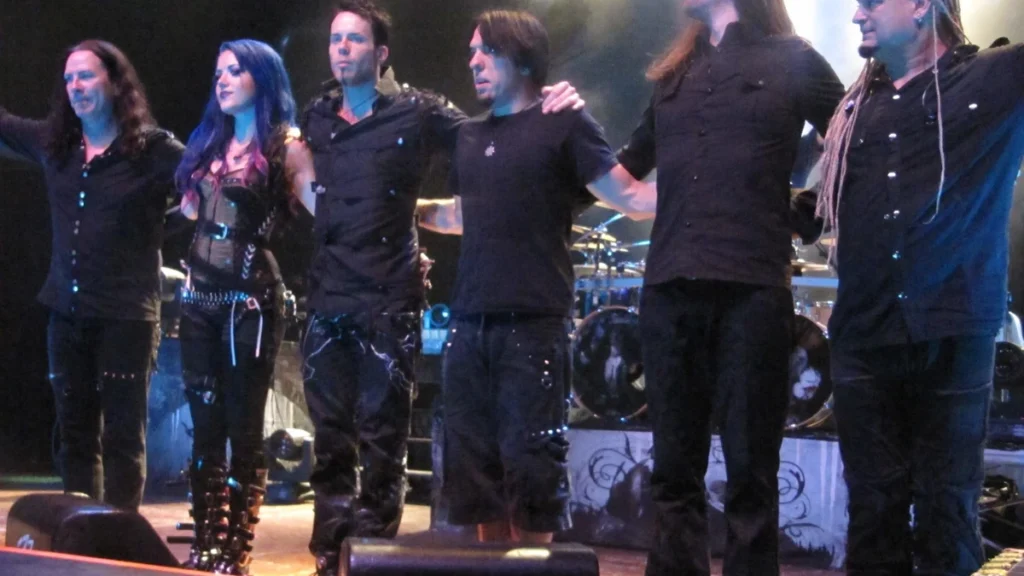
Kamelot performing live in Pratteln, Switzerland.
Kamelot performing live in Pratteln, Switzerland.
Kamelot Dark Asylum arrived on 28 August through Napalm Records. It is the band’s fourteenth studio album and a full concept record rather than a collection of songs.
The setting is RavenHill Asylum, a fictional institution in a shadowed neo-Victorian world. The building was constructed as a grand cathedral and later repurposed, which is the image the whole album is built around.
A Cathedral Turned Into an Asylum
The central conceit does a lot of work. A building raised for worship and converted into a place for confining the mentally ill collapses two institutions into one physical space.
The band describe RavenHill as a place where science, faith and madness coexist uneasily, which is the tension the record runs on rather than a background detail.
For symphonic metal, that setting is close to ideal. The genre’s orchestration already implies cathedral scale, so the concept and the arrangement point in the same direction.
What Tommy Karevik Says It Is About
Karevik has framed the record as an invitation into what he calls the hidden chambers of the human mind.
He has described the album as exploring the duality of human nature: the tension between fear and hope, chaos and stillness, destruction and healing.
That is standard territory for the genre, and Kamelot have worked it before. What distinguishes a good version from a weak one is whether the setting stays concrete rather than dissolving into abstraction.
Fourteen Albums Deep
A fourteenth studio album puts Kamelot among the longest-running acts in symphonic metal, a genre that has produced fewer durable careers than its audience size would suggest.
Dark Asylum follows Haven, The Shadow Theory and The Awakening, which together form the bulk of the band’s output with Karevik as vocalist.
Reaching that number without a hiatus or a reformation is unusual, and it means the catalogue can be read as continuous development rather than as separate eras.
The Roy Khan Comparison Has Not Gone Away
The most telling line in the coverage is that the record is “pretty much everything long-time fans of the band wished to hear since Roy Khan retired”.
Khan sang on the albums that established Kamelot internationally, and his departure was the defining event in the band’s history. Every record since has been measured against that period whether or not the band wanted it.
A review framing this album as the answer to that comparison is significant. It suggests the band have finally moved past a fourteen-year-old question rather than continuing to work around it.
Karevik’s Performance Is the Story
Reviewers have converged on the vocals. Distorted Sound called the consistent vocal masterclass from Karevik the true highlight of the record and described the performances as easily his best.
That is a specific claim rather than general praise. It says the album’s strongest element is the thing the band were most doubted on when he joined.
For a singer who spent over a decade being compared to a predecessor, having the reviews lead with his performance is the outcome that matters.
Sascha Paeth and the Symphonic Sound
Sascha Paeth produced the album with the band, and his involvement is close to definitional for the genre.
Paeth has worked across most of the significant European symphonic and power metal catalogues, and the production approach associated with him is the sound most listeners think of when they think of the form: layered orchestration sitting on top of a rhythm section that stays legible underneath.
Getting that balance right is the technical problem in symphonic metal. Too much orchestration and the band disappears; too little and the concept collapses.
Jacob Hansen on the Mix
Jacob Hansen mixed and mastered the record, and he is the other name that recurs across this part of the genre.
Hansen’s mixes are known for clarity at high density, which is exactly what an album with orchestral arrangements, layered vocals and metal guitars requires.
Between Paeth and Hansen, the record has the two most established craftsmen in European symphonic metal on the production and the mix. That is not a risk-taking choice, but it is a reliable one.
Why Concept Albums Persist in Metal
Metal has kept the concept album alive long after most genres abandoned it, and the reasons are structural rather than nostalgic.
The audience still listens to records front to back, the artwork and packaging are still bought physically, and the live show is built as a staged event rather than a run of singles.
A narrative frame therefore has somewhere to live. In a genre where the album is the primary unit, a story across eleven or twelve tracks is a feature rather than an imposition.
Napalm Records and the European Model
Napalm Records is one of the larger independent metal labels operating out of Europe, and its roster spans symphonic, folk, gothic and traditional heavy metal.
That kind of label runs on catalogue depth and a physical-sales business that most of the wider industry has abandoned. Special editions, vinyl variants and box sets are core revenue rather than a marketing extra.
For a band on its fourteenth album, that is the right infrastructure. The audience buys objects, and the label is built to sell them.
The Neo-Victorian Setting Is a Choice
Symphonic metal has always leaned on historical and fantastical settings, but the specifically Victorian register carries its own associations: institutional cruelty, industrial confidence and a particular kind of moral certainty.
An asylum in that period sits at the intersection of all three, because nineteenth-century psychiatry combined genuine scientific ambition with practices later understood as abusive.
That gives the concept somewhere real to stand. The setting is not purely invented, and the tension the band describe between science, faith and madness is a fair description of the historical institution.
Where the Album Landed
Dark Asylum was released into one of the year’s most crowded weeks for heavy music, alongside more than sixty other rock and metal titles including new records from Russian Circles and Mastodon.
Metal’s release calendar clusters harder than most genres, and late August sits at the end of the European festival season when the audience is already engaged.
A band on its fourteenth album is largely insulated from that crowding. The audience is established and follows the release rather than discovering it.
The Long Shadow of a Line-Up Change
Replacing a lead singer is the hardest thing a band can survive, and most do not. The voice is the part of a record listeners identify with most directly, and a new one changes the band at the level people notice first.
Kamelot’s route through it was to hire a singer with a comparable range rather than one who sounded nothing like the predecessor, which is the higher-risk option. A different voice gets judged on its own terms; a similar voice invites permanent side-by-side comparison.
What made it work over time was volume of output. Four albums with Karevik on them is enough material for the audience to have its own memories attached to his era rather than only to the earlier one.
That is the quiet reason a fourteenth album matters. Longevity eventually resolves arguments that no single record can.
Symphonic Metal Is a European Business
The genre’s economics are concentrated in continental Europe in a way that is easy to miss from outside it. The festivals are there, the labels are there, and the audience that buys physical product is there.
That geography shapes the music. Bands write for large outdoor stages and for rooms where an orchestral arrangement will be heard through a serious sound system, not for headphones on a commute.
It also explains the production values. A genre funded by ticket sales and physical releases can afford orchestration, guest choirs and long studio periods, none of which a streaming-first economy would justify.
Kamelot are an American band by origin who have operated inside that European system for most of their career, which is why their release calendar tracks the continental festival season rather than a domestic one.
What Is Actually Being Tested
Two things. Whether the concept holds across a full album, because a strong setting can carry three tracks and still leave the remaining nine without a job.
And whether the reviews are right that this is the record that closes the Khan-era comparison. That is an audience question rather than a critical one, and it will be visible in how the songs are received live.
A fourteenth album, a cathedral converted into an asylum, and the two most established producers in European symphonic metal on the desk.
About The Author