Immanuel Wilkins Village Vanguard Set Became Three Volumes
5 min read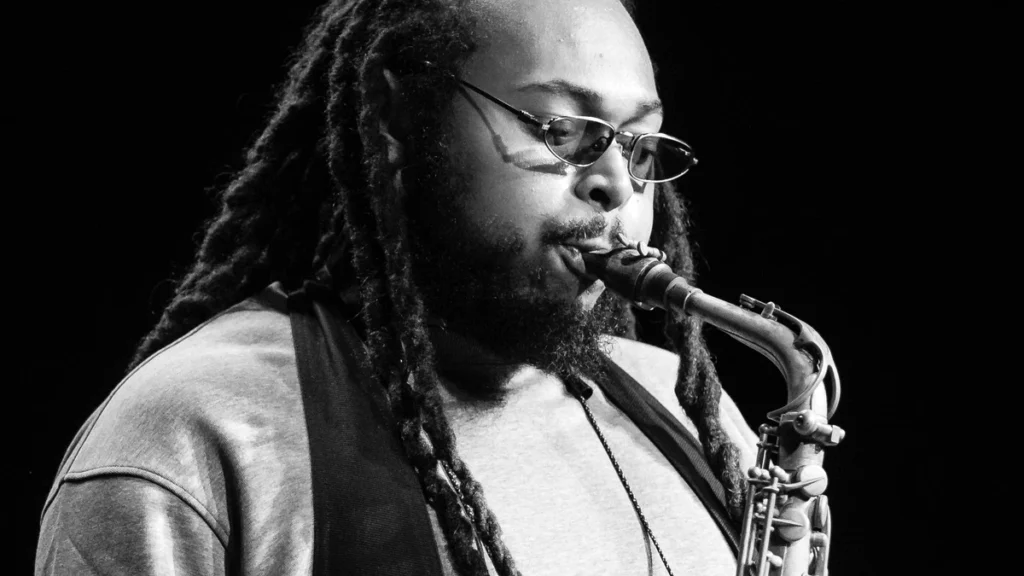
Immanuel Wilkins performing at the Oslo Jazzfestival in 2025.
Immanuel Wilkins performing at the Oslo Jazzfestival in 2025.
Two nights, three volumes, one physical release. Immanuel Wilkins Village Vanguard recordings were made across 15 and 16 May 2025 and issued by Blue Note as a staggered three-part live album.
The release structure is the unusual part. Volume one arrived on 20 March on vinyl, CD and digital. Volumes two and three followed on 17 April and 15 May, digital-only.
A First Live Album, Released in Instalments
Blue Note’s announcement describes the set as the Grammy-nominated alto saxophonist’s first ever live album, and a three-volume document of his quartet at what it calls the hallowed NYC jazz shrine.
Splitting a live recording across three releases is a decision about attention rather than about material. A single triple album asks for one very large commitment. Three instalments two months apart give each one its own release moment.
There is a practical dimension too. Three separate release dates generate three sets of coverage, three playlist opportunities and three moments when an algorithm registers new activity from the artist. A single triple album would have produced one.
The risk is fragmentation. A listener who hears volume two without volume one encounters a body of work with no obvious entry point, and the volumes are not designed as standalone statements.
The format split reinforces that. Blue Note confirms volume one on LP, CD and digital, with volumes two and three digital-only. The physical edition anchors the campaign; the digital instalments extend it without pressing costs.
The Room Is the Subject
What separates this from a routine live album is that the venue is treated as the point. The liner notes by Tina M. Campt make the argument explicitly.
The Vanguard, she writes, makes you feel the presence of performances still alive in the room, and lists the musicians whose live recordings were made inside the same walls: John Coltrane, Sonny Rollins, Bill Evans, Elvin Jones, Dizzy Gillespie, Dexter Gordon.
Her reading of the album is that it is a bold endeavour to summon the Vanguard’s sonic history and make it audible, harnessing that legacy and reactivating it as practice. She names three components: improvisational sounding, congregational listening and devotional ritual.
That is an unusually specific claim for a live jazz record, and it explains why the album was made at this venue rather than at whichever room the tour reached.
Why a Club Recording Still Matters
Live jazz albums occupy a specific place in the form. For most genres a live record is a document of a tour; in jazz it has repeatedly been the record where the music actually happened, because the material is written to be extended rather than reproduced.
The names Campt lists are the evidence. Those musicians did not merely play the Vanguard, they made records there that became the reference versions of their work, in some cases more definitive than the studio equivalents.
Wilkins releasing a first live album this early is therefore a statement about which tradition he is working in. A studio-only discography would place him alongside contemporary composers; a Vanguard set places him in a lineage.
The Quartet
The band is Wilkins on alto saxophone, Micah Thomas on piano, Ryoma Takenaga on bass and Kweku Sumbry on drums.
This is a working group rather than an assembled session band, which matters for a live recording. Expansive exploration of original material over two nights only produces usable takes if the players can follow each other without a chart.
Blue Note’s framing puts Wilkins on the list of jazz musicians who have made seminal live recordings at the venue. That is a large claim to attach to a first live album, and it sets the terms the record is asking to be judged on.
What Two Nights Actually Yields
Three volumes from two nights implies a great deal of usable material, which tells you something about how the quartet plays. A band working through tight arrangements produces one album from two nights. A band extending pieces produces several.
It also means the sequencing was done after the fact. Nobody plays two nights intending to fill three volumes in a fixed order, so the running order across the set is an editorial construction imposed on the recordings afterwards.
That is the hidden work in a release like this. The performances are the band’s; the shape of the album is the artist and the label deciding which explorations belong together and in what order.
One Composition That Is Not His
The programme is almost entirely Wilkins originals, with one exception: Alice Coltrane’s devotional composition Charanam, from her 1981 recording Turiya Sings.
The choice of that single cover does specific work. Alice Coltrane’s devotional records sit slightly outside the standard jazz canon, and choosing her rather than a standard signals which tradition the album is claiming.
It also matches the framing in the liner notes. A record described in terms of devotional ritual and congregational listening is coherent with a devotional composition at its centre, and the quartet’s performance of it was used to introduce the whole project.
Why Live Recording Suits This Music
Expansive improvisation on original material is difficult to capture in a studio. Take-based recording rewards compression and decisiveness; long-form playing rewards the opposite.
A club recording over two nights produces the length the music needs, and it captures an audience, which changes how a band plays. The congregational element in Campt’s description is not a metaphor; it depends on people being in the room.
The trade is control. A live album cannot be fixed afterwards without undermining the thing it documents, which is why the volume of usable material from two nights determined the release structure rather than the other way round.
The Wider Campaign
The quartet followed the releases with an NPR Tiny Desk Concert drawing on material from The 7th Hand, Blues Blood and volume two of the Vanguard set.
That kind of appearance does more for a jazz record than conventional promotion. It reaches an audience that does not follow jazz release schedules and presents the band playing rather than being described.
For a three-part release spread across three months, it also gives the campaign a focal point after the instalments have finished arriving.
What This Says About Jazz Releases Now
The economics behind the format split are worth stating plainly. Pressing one volume and releasing two digitally lets a label put a substantial body of live material out without carrying manufacturing risk on all of it.
It is the same logic we examined in looking at how streaming came to account for roughly seventy per cent of recorded music revenue: when distribution is nearly free, the constraint on how much music reaches listeners is no longer manufacturing, and release strategy adjusts accordingly.
For jazz specifically that is a meaningful shift. Long-form live playing used to be the material most likely to be cut for reasons of format. It no longer has to be.
For an artist at Wilkins’ stage, the more consequential measure is whether the live album becomes the record people reach for first. That is what happened to several of the Vanguard sets Campt lists, and it is the outcome a first live album at this venue is implicitly aiming at.
Two nights, four musicians, three volumes and one borrowed composition. The room is credited as much as the band.
About The Author