Victoria Monet Announced Frequency of Love for October
6 min read
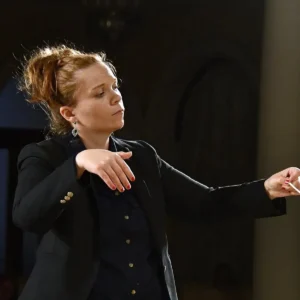
Victoria Monet performing live.
Victoria Monet performing live.
Victoria Monet has announced Frequency of Love for 2 October through Lovett Music and RCA Records. It is her second studio album and the follow-up to the record that won her three Grammys.
The Apple Music pre-save lists twenty-two tracks, which is a substantial length and not what most artists do after a breakthrough.
Twenty-Two Tracks Is a Statement
A twenty-two track album is roughly double the current standard for a major-label R&B release, and the reasons artists go that long are usually strategic rather than artistic.
Long tracklists inflate streaming totals, because every track counts toward album-equivalent units regardless of quality. That has produced a decade of bloated records.
What makes this case different is that Monet is a songwriter first, with years of credits for other artists behind her. A long album from a writer is more plausibly a backlog being cleared than a chart calculation.
The test is whether it sequences. Twenty-two tracks that hold together is a double album; twenty-two tracks that do not is a playlist with a cover.
The Reference Point Moved a Decade
Monet has been direct about the shift. “This album that I’m working on right now is so, so R&B,” she said. “Jaguar II was R&B, but it was set in the era of the ’70s. This feels more like ’90s R&B.”
That is a precise description rather than a vague one. Seventies R&B means live rhythm sections, horn arrangements and a particular kind of vocal warmth.
Nineties R&B means programmed drums, layered background vocals, a heavier low end and a colder, more produced surface.
Moving between them is a genuine change of method, not a change of mood, and it affects who she needed in the room.
Kaytranada and D’Mile on the Lead Single
“Reach Out” was produced by Kaytranada and D’Mile, a pairing that spans two distinct production worlds.
D’Mile has been Monet’s long-term collaborator and is one of the architects of the sound that won Jaguar II its awards. Kaytranada comes from a house and electronic lineage.
Putting them together on the lead track signals that the nineties reference is not going to be executed as a straight revival. There is a rhythmic sensibility being imported from outside the genre.
The Video Had a Full Production Team
The accompanying video was directed by Dave Meyers with choreography by Sean Bankhead.
Both are at the top of their respective fields, and hiring them indicates the campaign is being resourced as a major release rather than a soft rollout.
Bankhead’s involvement is the more informative detail. A choreographer of that standing implies the record has material built for movement, which fits the Kaytranada production credit.
What Jaguar II Established
Jaguar II won Best R&B Album at the 2024 Grammys, alongside Best Engineered Album, Non-Classical and Best New Artist, three wins from seven nominations.
Best New Artist is the award with the longest shadow. It confers enormous visibility and creates an expectation that the next record will consolidate.
The engineering award is the more telling one for a follow-up, because it indicates the first album’s sound was recognised as a technical achievement rather than only a commercial one.
The Best New Artist Problem
Winning Best New Artist has a well-documented history of being followed by a difficult second record, and the reasons are structural.
The debut was made with no expectations and unlimited time. The follow-up is made with a deadline, a label with a revenue target and an audience that has already decided what it wants.
Taking two years and delivering twenty-two tracks is at least a refusal to make the small, cautious record that usually follows.
Let Me Already Went to Number One
The album includes “Let Me”, which reached number one on R&B radio ahead of the announcement.
R&B radio remains a meaningful format in the United States in a way that most genre-specific radio no longer is, with a devoted audience and real influence on how a record performs.
Having a number one from the album already in circulation removes some of the risk from a two-month announcement window. The record arrives with proof rather than promise.
A Songwriter Who Became an Artist
Monet spent years writing for other people before releasing under her own name, which is an unusual route into a solo career and shapes the work.
Writers who cross over tend to have a stronger sense of structure than performers who started as performers, because the craft was the job before the persona was.
It also explains the tracklist length. Someone who has been writing professionally for a decade has material, and an album is a place to put it.
Lovett Music and the Imprint Model
The release comes through Lovett Music in partnership with RCA, which is the standard imprint structure for an established artist.
The arrangement gives the artist a named label of their own with major-label distribution and marketing behind it.
How much autonomy it confers varies enormously. In the best cases it is genuine creative control; in others it is a credit on the packaging.
Why October Rather Than Summer
An early-October date puts the album in the autumn release window, ahead of the year-end lists and inside the Grammy eligibility period.
For an artist with a Grammy history, that timing is not incidental. Records released in the autumn are fresh in voters’ minds when ballots go out.
It also avoids the summer, where R&B albums compete with festival-season pop and rarely get sustained coverage.
The Nineties Revival Is Crowded
Contemporary R&B has been mining the nineties for several years, and a large part of the current field references that decade in some form.
Doing it distinctively therefore requires more than the reference itself. The production choices have to add something the originals did not have.
The Kaytranada credit is the clearest evidence of intent. His rhythmic approach is not nineties R&B and never has been, which gives the record somewhere to go beyond homage.
Two Months of Runway
Announcing in late July for an October release gives the campaign roughly ten weeks, which is a conventional window for a major R&B record.
That period is used to establish the lead single at radio, seed the video and confirm any touring that will follow.
With a number one already on the record and a second single in circulation, the album is arriving with more momentum than most sophomore releases manage.
What R&B Radio Still Does
It is easy to assume radio stopped mattering, and for most genres that is broadly true. R&B is one of the clear exceptions, and the reason is demographic rather than nostalgic.
The format retains a large, loyal and older-skewing audience that listens in cars and at work, which is listening time streaming playlists do not capture as reliably. A number one on that format reaches people who will never encounter a track through an algorithm.
It also functions as a signal to the rest of the industry. Radio programmers are professional listeners with a commercial incentive to be right, and a record that reaches the top of the format has cleared a real filter.
For an album arriving two months later, that is worth more than a viral moment, because radio audiences convert into ticket buyers at a much higher rate than short-form video audiences do.
The Cost of a Long Album
Twenty-two tracks is expensive in ways that are invisible from outside. Every song carries studio time, session players, mixing, mastering and clearance, and a long record multiplies all of it.
It also multiplies the publishing arithmetic. Mechanical royalties on an album are divided across the tracks, so a longer record pays each writer less per song while costing the label more to make.
The offset is streaming. More tracks means more individual streams and a higher album-equivalent count, which is why the long album persisted despite making little sense on any other measure.
For a writer-producer with her own imprint, the calculation is different again, because more of the publishing stays in-house and the cost of a long record is partly a cost paid to herself.
What Is Actually Being Tested
Two things. Whether twenty-two tracks can hold a listener across a full sequence, because length is the single most common way a good R&B record becomes a tiring one.
And whether the shift from seventies to nineties reads as growth or as a genre move. Monet’s first album succeeded partly because its period setting was executed with unusual precision, and precision is harder in a decade everyone is already working in.
A second album, twenty-two tracks, three Grammys behind it, and a decade of reference moved forward by twenty years.
About The Author