Karol G Finished Her Album Months Ago and Sat on It
6 min read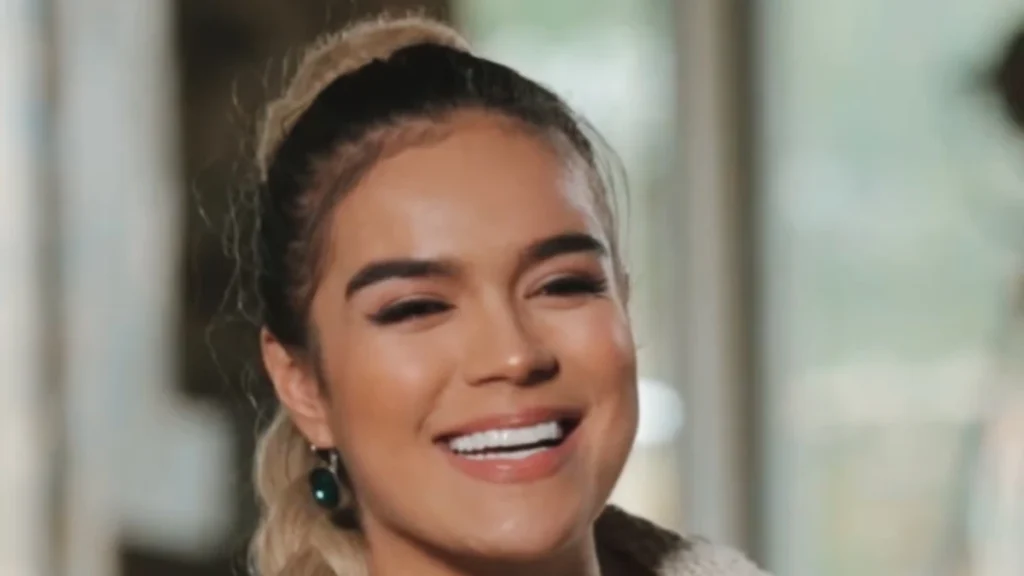
Karol G’s next album has been finished for some time. She did not release it, and her explanation is unusually direct about why.
No Me Arrepiento de Sentir Tanto — “I Don’t Regret Feeling So Much” — arrives on 20 November through Bichota Records and Interscope, running forty-two minutes and fifty-four seconds in Spanish and English.
A Finished Album, Deliberately Withheld
Speaking to Rolling Stone, she said the record had been done for months. “This album has been ready for a long time, but to be honest, I didn’t want it to feel like I was exploiting a personal situation. I didn’t want it to feel like this album was part of some marketing campaign.”
She went further: “It was very personal to me. It was so personal that I didn’t even feel ready to release it.”
Holding a completed album is expensive. Release schedules are built around tours, award windows and streaming quarters, and a finished record sitting unreleased is capital doing nothing.
What makes the reasoning distinctive is that the risk she names is not commercial but interpretive. An artist releasing a personal record at a moment when the public already has a story about her life invites everybody to read the songs through that story — and to assume the timing was chosen for exactly that reason.
Waiting is the only defence against it. The songs do not change, but the frame they arrive in does, and an album released once the immediate context has cooled is more likely to be heard as music than as testimony.
The Hikes That Started It
The material dates back further still. The inspiration began in November 2025, when she took solo hikes through the mountains of Hawaii — an experience she has said taught her about loneliness and isolation inside the music industry.
That is a specific and unglamorous origin for a record by an artist who fills stadiums. Isolation is the standard occupational hazard at that level and it is rarely named directly, because it sits awkwardly next to the scale of the success.
She has framed the album’s purpose the same way. It “opens a door for my fans to a more intimate Carolina”, she said, using her own first name rather than the stage one.
Her fullest explanation came from an unexpected direction. “When I did the Playboy photoshoot this year, they asked me: ‘What don’t people know about you?’. I said, ‘People know everything about me. I’m a public figure, and that’s just how it is. I share a lot.’ But we all keep something that is only ours and that exists in our room at night, lying in bed, staring at the ceiling, listening to music. Just existing.”
Even the listening instructions follow from it. She has encouraged fans to hear the album “in their own rooms and see what comes up for them”, describing a recording atmosphere of “little lights”, “candles” and “incense”. Our piece on how K-pop stopped being a regional chart story covers the wider shift that lets a Spanish-language record be positioned this way globally.
Sixteen Producers and a Very Wide Net
The credits do not match the bedroom framing. Sixteen producers are listed, including Edgar Barrera, Bruno Mars, Cashmere Cat, D’Mile, Omer Fedi, Oklou, Ovy on the Drums, Sky Rompiendo, Tainy and Karol G herself.
That is a genuinely international spread. Ovy on the Drums and Sky Rompiendo are central to Colombian reggaeton; Tainy is one of the defining producers of the modern Latin sound; Cashmere Cat and Oklou come from very different electronic traditions; D’Mile and Bruno Mars belong to American R&B and pop.
Guest appearances follow the same logic, with Bruno Mars, Judeline, Rusowsky, Greg Gonzalez and a rapper from the North American mainstream among them.
An intimate record made with sixteen producers sounds like a contradiction, and it may be one. It is also how a global-scale artist works: the intimacy is in the writing, and the production is assembled from whoever can realise a specific idea best.
The alternative reading is more generous. A record about isolation made with sixteen collaborators is not necessarily hypocritical; it may simply be someone who has understood that the loneliness she is describing is compatible with being surrounded by people, which is the specific version of it the music industry produces.
Her own name appears among the producers, which is the detail that keeps the framing honest. An artist who describes a record as personal and then has no production credit on it is describing somebody else’s work; here she is one of the people who built it.
Four Singles Before the Album Was Even Announced
The rollout has been unusually staggered. “Después de Ti”, with Greg Gonzalez, was performed at Coachella on 12 April and released on 23 April with no prior announcement.
“Matadora” followed on 24 July, announced the day before and timed to coincide with the start of her Viajando Por El Mundo Tropitour, the fourth solo tour of her career.
The album itself was not announced until 29 July, from the stage at Rogers Stadium in Toronto, where she told the audience she had spent the past couple of months locked away recording. The tracklist appeared on 5 August.
Two more singles arrived after that: “Still” was formalised through radio add reports on 11 August and given its own digital release with distinct cover art on 20 August, and “Bby Wow” followed on 25 August.
Releasing two lead singles before announcing the album is the opposite of the standard sequence, where the announcement creates the context the singles then fill. Here the songs arrived first and the album was revealed to have been waiting behind them.
That ordering is consistent with an artist reluctant to commit. Putting out singles keeps a catalogue moving without declaring that a body of work exists, and it leaves the decision about the album itself open for as long as possible.
The announcement venue matters too. Revealing a release date from the stage of a stadium mid-tour, rather than through a label statement, puts the news in front of the people already in the room — which for a record framed as a gift to fans is the consistent choice.
It also arrived with a four-month lead time. Announcing on 29 July for a 20 November release is a long runway by current standards, and it gives the two remaining singles somewhere to sit without crowding the album.
Sixth Album, Third in the United States
The counting is worth clarifying because it says something about her career shape. This is her sixth studio album overall and her third released in the United States, following Tropicoqueta.
That gap between the two figures is the story of Latin music’s last decade in miniature. An artist can build an entire catalogue in one market and then be introduced to another as though the earlier work did not exist.
A bilingual album on Interscope with a Bruno Mars feature is the natural endpoint of that process, and the interesting question is what it costs. Records made for two markets at once historically satisfy neither, and the standard failure is an English-language pivot that loses the audience that built the artist.
Keeping the title in Spanish, and the record majority-Spanish, is at least a statement about which audience comes first. So is releasing it through her own Bichota Records alongside the major.
Whether an album this deliberately withheld can survive a November release week is the last open question. Held records acquire expectations that no set of songs can meet, which may be precisely why she was not ready to let it go.
No Me Arrepiento de Sentir Tanto is out on 20 November through Bichota Records and Interscope.
About The Author