Yuja Wang Recorded the Shostakovich Piano Concertos in Boston
6 min read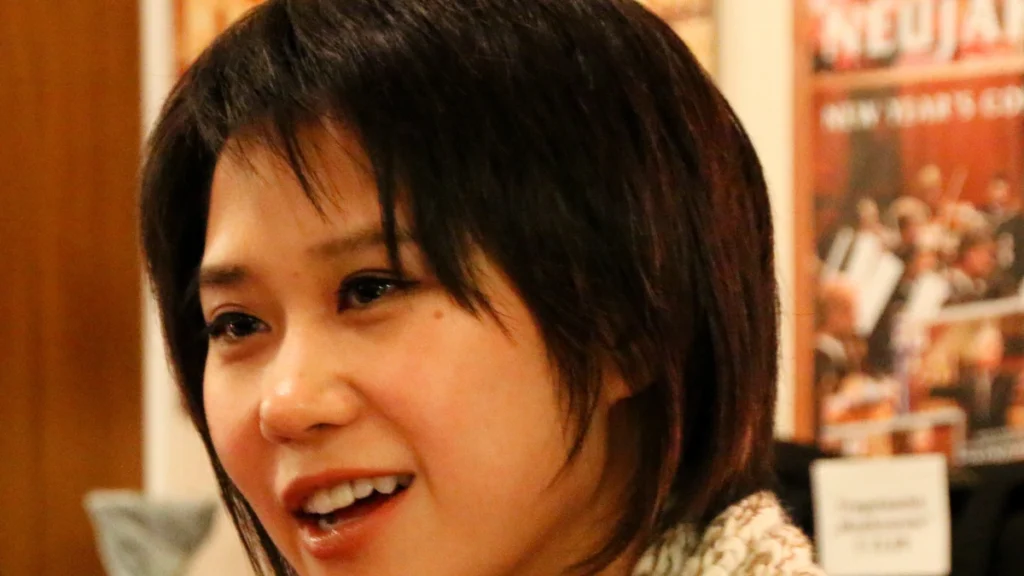
Yuja Wang photographed in 2014.
Yuja Wang photographed in 2014.
Yuja Wang‘s recording of the Shostakovich piano concertos, made with Andris Nelsons and the Boston Symphony Orchestra, was nominated for Best Classical Instrumental Solo at the 68th Grammy Awards in February.
The album pairs the two concertos with solo works, which is a specific editorial decision rather than a filler arrangement.
Two Concertos That Barely Belong Together
Shostakovich wrote two piano concertos separated by more than twenty years, and they are almost comically different pieces.
The first, from 1933, is scored for piano, trumpet and strings, and it is sardonic, fast and full of quotation. The second, from 1957, was written for his son and is comparatively warm.
Recording both on one album forces the contrast into the open, and the pairing tells a listener something about the composer that neither piece does alone.
Adding solo works fills out the picture further, because Shostakovich’s writing for solo piano occupies yet another register again.
Nelsons and Boston Have Form Here
Andris Nelsons and the Boston Symphony Orchestra have spent years working through the Shostakovich catalogue, and the partnership is one of the most sustained recording projects in current orchestral music.
That matters for a concerto recording. An orchestra that has lived inside a composer’s language for a decade plays it differently from one reading it fresh.
It also means the soloist is joining an established interpretation rather than defining one, which is a different kind of collaboration.
What the Category Rewards
Best Classical Instrumental Solo is a soloist’s category, and the criteria are more specific than they appear.
It measures the performance rather than the repertoire or the production, which is unusual among Grammy categories.
For a pianist, that means technical command, interpretive decisions and the relationship with the orchestra are all being judged in one award.
The 68th Ceremony
The 68th Grammy Awards were held on 1 February 2026 at the Crypto.com Arena in Los Angeles, broadcast on CBS and streamed on Paramount Plus. The category went to Yo-Yo Ma.
Classical categories are almost entirely awarded off-air during the premiere ceremony, which is a long-standing and much-criticised arrangement.
The practical effect is that the recognition matters inside classical music and reaches almost nobody outside it, which is precisely the visibility problem the field keeps discussing.
A Duo Tour With Another Yellow Label Pianist
Wang spent part of the 2024-25 season touring Europe and North America as a piano duo with Vikingur Olafsson.
Two-piano touring at that level is unusual. The repertoire is smaller, the logistics are harder and the economics are worse than a solo recital.
What it produces is a genuinely different concert. Two soloists of that standing playing together are audibly negotiating in real time, which a recital cannot offer.
Shostakovich as a Recording Project
Shostakovich has become one of the most recorded twentieth-century composers, and the reason is partly musical and partly historical.
The music works on multiple levels at once, and the political circumstances under which it was written give every ambiguity a second reading.
That makes it endlessly re-recordable. Each generation hears the irony differently, which is a rare quality in a repertoire that is otherwise well covered.
The Deutsche Grammophon Position
Wang records for Deutsche Grammophon, which remains the most recognisable brand in classical recording and one of the few with genuine international reach.
A DG contract still confers a specific kind of status, and the label’s roster is a reasonable map of who the industry considers significant.
It also means the recordings are made to a particular standard and marketed through infrastructure most classical labels no longer have.
Virtuosity and How It Gets Written About
Wang’s technical facility is the thing most coverage leads with, and it is genuinely exceptional by any measure.
The risk in that framing is that a pianist becomes known for speed and accuracy rather than for interpretation, which is a reductive way to hear any musician.
Recording the Shostakovich concertos is a partial answer to it. The first concerto rewards precision; the second does not, and playing both well requires two different things.
The Coverage Problem
Wang has been subject to a persistent strand of commentary about what she wears on stage, which has taken up space that would otherwise have gone to the playing.
That commentary says considerably more about classical music’s expectations of women than it does about any performance.
It is worth naming because it is part of the professional environment she has worked in, and because the alternative is to pretend it has not happened.
What a Concerto Recording Actually Requires
Recording a concerto is technically among the hardest things in classical music, because a soloist and an orchestra have to be balanced without either disappearing.
The piano is loud, the orchestra is louder, and the microphone placement that captures one well tends to compromise the other.
Getting it right is a production achievement as much as a musical one, which is why classical engineering has its own Grammy category.
Why Solo Works Were Included
Adding solo pieces to a concerto album gives the release a different shape, and it serves the listener rather than the catalogue.
Two concertos alone would run short for an album, and the usual solution is to add a third work by a different composer.
Staying inside Shostakovich instead makes the record a portrait rather than a programme, which is a more coherent proposition.
Classical Recording’s Current Economics
Orchestral recording is expensive and the market is small, which is why so much of it now happens through orchestra-owned labels or with institutional support.
A major-label concerto recording with a star soloist and a leading orchestra is one of the few configurations that still justifies the cost.
That is why the same names recur. The economics permit fewer projects, and the projects go to the artists who can sell them.
A Strong Nomination Field
The category also contained Yo-Yo Ma’s recording of the Shostakovich cello concertos with the same conductor and orchestra, and that is the record that won.
Two Shostakovich concerto recordings from the same partnership competing in one category is an unusual coincidence and a fair reflection of how much of that catalogue Boston has been working through.
It also made the comparison unusually direct, which rarely happens in a category spanning different composers and forces. Losing to a stablemate is a particular kind of near miss.
The First Concerto’s Trumpet Problem
The 1933 concerto is scored for piano, solo trumpet and strings, and the trumpet is not an accompanying voice. It is a second soloist, and the piece works as an argument between the two instruments rather than as a piano concerto with an unusual colour added.
That creates a practical difficulty for any recording. The trumpet player is a member of the orchestra rather than a billed soloist, but the part demands soloist-level playing and soloist-level presence in the mix.
Orchestras with a strong principal trumpet have an obvious advantage here, and the balance decisions made in the control room effectively determine whether the piece reads as a duel or as a piano concerto with decoration.
It is one of the reasons the first concerto is recorded less often than the second despite being the more immediately entertaining of the two.
Reading Shostakovich Now
Every generation of performers has had to decide how much of the political reading to put into the playing, and the decision is audible.
One approach treats the irony as the content: the jokes are bitter, the marches are hollow, and the warmth is always slightly false. Another plays the notes straight and lets the listener supply the context.
Neither is obviously right. The composer left enough ambiguity that both readings are defensible, and the recordings that last tend to be the ones with a clear position rather than a hedge.
A recording that pairs the sardonic first concerto with the openly affectionate second is at least being explicit that both things are true of the same composer, which is more honest than choosing one.
What Is Actually Being Tested
Two things. Whether a pianist known for spectacular technique is heard differently in repertoire that rewards restraint as much as speed.
And whether an orchestra a decade into a single-composer project brings depth or settled habit to a new recording.
Two concertos twenty-four years apart, a conductor who has spent a decade on this composer, and a soloist most people describe with the wrong adjective first.
About The Author