Blondshell’s Third Album Is About Refusing to Be Rushed
5 min read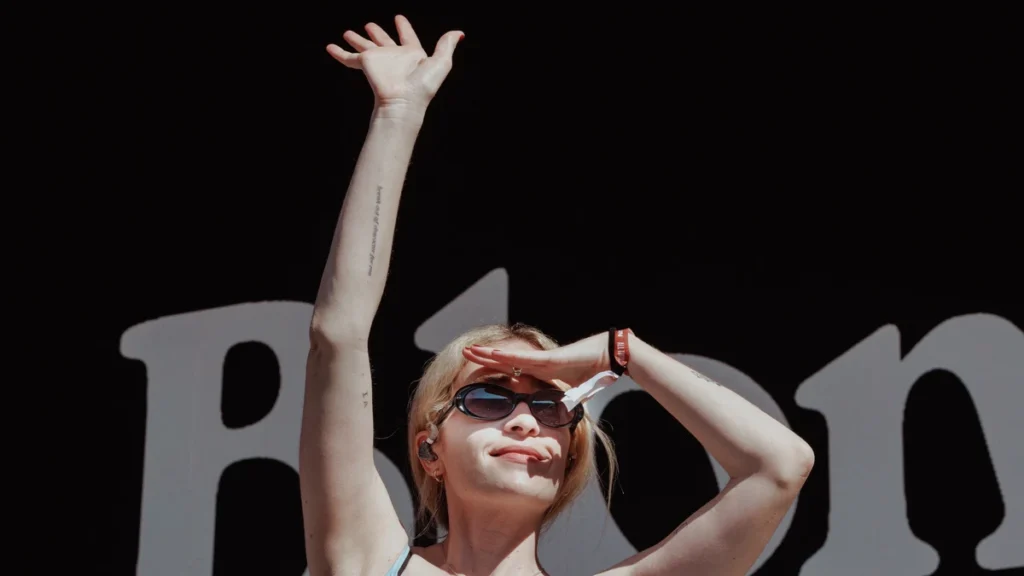
Sabrina Teitelbaum has made three albums in four years. The third one is about not being hurried.
Violins arrives on 25 September through Partisan Records, eleven tracks long, following 2025’s If You Asked for a Picture and the 2023 self-titled debut.
She Decided to Stop Overexplaining
Teitelbaum’s account of the change is about trust rather than technique. “I felt like I didn’t need to overexplain anything, like I can trust the people listening more,” she said.
Then the sentence that describes a career rather than a record: “It feels like every time I make a record, I get closer to making the thing that I really want to make.”
That is a more honest formulation than most artists offer. It concedes that the earlier albums were approximations without disowning them, and it declines to claim the new one has arrived.
Overexplaining is a specific failure mode in confessional songwriting. A writer working from difficult personal material is under constant pressure to make the situation legible — to supply the context that lets a listener understand what happened.
Deciding to stop is a bet that the emotional information survives without the narrative one. It usually produces stranger, better songs and a smaller audience for them.
Healing on Its Own Schedule
The title track was released as the second single in June and has been described as the record’s North Star, concerned with how true healing from trauma takes a lifetime.
Teitelbaum’s explanation is worth quoting at length. “This song sums up the album in a lot of ways. When I was writing I felt really drawn to images of patience and kindness, for example putting your head on someone’s shoulder, alongside images of violence.”
She continued: “I was also inspired by the idea of healing slowly and refusing to be rushed by any outside force. Things genuinely just take the time they take.”
Then a line that is funnier and sharper than the rest: “I’m not at a point in life where I can have a no assholes policy yet, but I like the idea of weeding out people that aren’t going to let me have limitations.”
That is a very precise piece of self-description. It refuses the tidy resolution a song about recovery usually reaches for, and it names the actual obstacle — not the trauma itself but the people who will not accommodate its pace.
Violence and Beauty at the Same Time
The album’s wider subjects are stated as balancing the world’s violence with its beauty, alongside troubled friendships, religion, the body, and the long, unglamorous work of healing.
“Unglamorous” is the operative word. Recovery narratives in pop tend to arrive at the point of resolution, because that is where the catharsis is; the middle, where nothing has changed yet and the work is repetitive, is much harder to make a song from.
The music is described as marked by grandeur, drama and tragedy, built on virtuoso hooks, swelling guitars and big lead lines — which is a deliberately large sound for material this interior.
That contrast is the record’s structural bet. Big guitars behind small, slow, difficult subjects is how the best of this tradition has always worked, and it is what stops an album about patience from sounding tired.
Our piece on why vinyl is a rounding error covers the format economics an independent-label record like this operates inside.
A Video Built From McQueen and Surrealist Theatre
The title track’s video, directed by Sabra Binder, nods to both Alexander McQueen’s design work and surrealist theatre productions.
Those are two references with a common thread: both use spectacle to make something disturbing legible rather than to decorate it. McQueen’s shows were narrative and frequently unsettling; surrealist theatre was built to disrupt the audience’s expectation of what a scene means.
For an album about violence sitting next to beauty, that visual grammar is the correct one. It is also a considerably more considered set of reference points than a lead-single video usually carries.
The first single, “Heart Has to Work So Hard”, arrived in May, giving the campaign four months from first song to album — a patient rollout for a record about patience.
Leading with the title track as the second single rather than the first is also a decision about what the record is. The opening single introduces the sound; the title track states the argument, and putting it second means the argument arrives once people are already listening.
Three Albums in Four Years
The release rate is worth measuring against the subject matter. The self-titled debut came in 2023, If You Asked for a Picture in 2025, and Violins arrives in 2026 — three records inside four years.
That is fast for an artist working with material this heavy. It is also the rate an independent-label act needs to sustain a touring career, since the tour is what pays and the tour needs a record.
An artist writing about refusing to be rushed while releasing an album every eighteen months is not being inconsistent. The pressure she is describing is not about output; it is about being expected to have finished processing something before the processing is done.
Theatres Rather Than Clubs
The touring plan is the clearest sign of where the audience now is. A thirteen-date North American run spans mid-October to early November, focused on theatres and mid-sized venues.
The rooms are specific: the Wiltern in Los Angeles, the Castro Theatre in San Francisco, the Crystal Ballroom in Portland, Showbox SoDo in Seattle, the Vic in Chicago, the Danforth Music Hall in Toronto.
Those are seated or semi-seated venues in the one-to-two-thousand range — a substantial step up from clubs and a long way short of arenas. It is the level at which a band can tour profitably without needing a radio hit.
Festival dates bookended the summer before it, at Summerfest in Milwaukee in July and Maha in Omaha in August, which is how an album gets played to people who have not bought a ticket for it.
Routing the headline run through October and early November also puts it immediately after release rather than months later. For an act at this level the tour is the campaign, and playing the record while it is still new is worth more than waiting for a bigger routing.
Partisan is the right home for that trajectory. The label has built its roster on artists who grow steadily through touring rather than through a breakout single, and an eleven-track record with no obvious radio play is exactly what that model is designed to support.
Eleven tracks is also a considered length. Long enough to develop an argument about patience across a full listen, short enough that nothing on it is there to fill space — which for a record explicitly about not overexplaining is the consistent choice.
The one thing the announcement does not tell us is who produced it. On a record framed around trusting the listener and cutting the explanation, that omission may itself be deliberate.
Three albums in four years, on an independent label, with a theatre tour and a record about refusing to be hurried. The pace of the career and the subject of the songs are pulling in opposite directions, which may be the most interesting thing about it.
Violins is out on 25 September through Partisan Records.
About The Author