Grace Potter Trespasser Is a Spiritual Sequel to Mother Road
6 min read
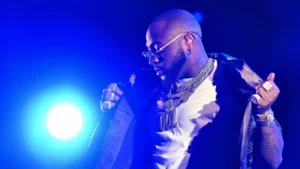
Grace Potter performing at Grand Point North.
Grace Potter performing at Grand Point North.
Grace Potter Trespasser arrived on 21 August, and the framing she has given it is unusually specific: it is the spiritual sequel to Mother Road, the album she released in 2023.
That is a deliberate claim rather than a marketing line. It tells you the new record is meant to be heard as a continuation of an argument, not as a reset.
A Sequel by Intention, Not by Accident
Artists rarely describe a new album as a sequel to the last one. The convention runs the other way — every record is presented as a departure, a new chapter, a break from what came before.
Potter has gone the opposite way. Calling Trespasser the spiritual sequel to Mother Road asks listeners to hold the two records together and read the second through the first.
It also sets a bar. A sequel has to advance something. If it only repeats the first record’s mood, the label works against it.
What the Title Actually Means to Her
Potter has been direct about the word she chose. “We’ve always been taught that the trespassers are the bad guys, but to me it’s not about reckless rebellion,” she said of the album, describing it instead as “about exploring, physically and mentally and emotionally, and being willing to step outside the narratives we’ve accepted.”
She went further: “Because in my experience, the places we’re told not to go are exactly the ones that show us who we really are.”
That reframes the title away from provocation. Trespassing here is a method of enquiry rather than a pose, which is a harder idea to carry across an album than simple defiance would be.
Recorded as a Journey, Not in a Room
The recording matched the theme. Rather than book a single studio and work through the material, Potter cut the record across several locations, describing the process itself as a journey.
Those locations were Topanga Canyon in California, Nashville, and Vermont. Each carries a different musical association, and none of them is a neutral choice.
Topanga is shorthand for a particular strain of Californian songwriting. Nashville is the industry’s centre of gravity. Vermont is where Potter is from.
Why Vermont Matters Here
Potter’s roots in Vermont are not incidental biography. She built her early career there fronting Grace Potter and the Nocturnals, and she founded the Grand Point North festival in Burlington, which anchored her to the state well after her audience became national.
Including Vermont in the recording itinerary places the home ground alongside the two industry centres rather than beneath them.
For a record about stepping outside accepted narratives, starting from somewhere that is genuinely yours is a defensible way to structure it.
Eric Valentine in the Producer’s Chair
The album was produced by Eric Valentine, Potter’s husband, whose credits include Queens of the Stone Age and Weezer.
That is a rock production lineage rather than a country or Americana one, and it is a meaningful signal about how the record is likely to sound. Valentine’s work is associated with weight and clarity in the guitars rather than with the softer, more acoustic textures the Americana label tends to imply.
Working with a spouse also removes a layer of negotiation. There is no diplomatic distance to manage, which can produce either a sharper record or a less edited one.
Where This Sits Between Genres
Potter has never been a straightforward country artist, and Trespasser does not appear to change that. Her catalogue sits between rock, soul and Americana, and the storytelling is what pulls it toward the country conversation rather than the instrumentation.
That ambiguity is why she turns up on country release guides without ever having made a country record in the Nashville radio sense.
It is also why the Valentine production choice is worth watching. A rock producer on a songwriter’s record either sharpens the narratives or buries them.
The Four-Time Grammy Nominee Framing
Potter is a four-time Grammy nominee, which is the credential most coverage leads with, and it is worth understanding what that measures.
Nominations track industry recognition rather than commercial scale. An artist can accumulate them across a career without ever having a defining chart moment, which is broadly Potter’s position.
It puts her in the category of artists whose work is respected inside the business and sustained by a live audience outside it. That is a durable place to operate from, and it is the position most of the current Americana middle class occupies.
What Mother Road Set Up
Mother Road arrived in 2023 and took its name from the highway nickname, which framed that album around movement, distance and the American road as a place where identity gets rearranged.
If Trespasser is the sequel to that, the shift in noun is the whole point. A road is a route somebody else has already built and marked. Trespassing is what happens when you leave it.
Read that way, the two titles describe consecutive stages of the same argument: first you travel the route, then you find out what is on the other side of the fence beside it.
That is a tighter conceptual link than most artists bother to build between consecutive albums, and it explains why she reached for the sequel language rather than the usual talk of a new chapter.
The Working Position of a Career Songwriter
Potter has been releasing records for two decades, first with a band and then under her own name, and the shape of that career is now common among artists at her level.
The model is a touring base, a festival she built herself, a catalogue that keeps circulating, and albums released when there is something to say rather than on a label’s schedule.
It is less lucrative than a chart career and considerably more durable. Artists working this way are not exposed to a single album underperforming, because the live audience is the asset and the record is what refreshes it.
Recording across three states with a producer she lives with is a cost structure that only makes sense inside that model. There is no committee to satisfy and no release window being defended.
A Release Date With No Space on It
Trespasser landed on one of the most crowded release days of the year for country and roots music. The same Friday brought new records from Cross Canadian Ragweed, Kimmi Bitter, Adam Chaffins and The Po’ Ramblin’ Boys, among others.
It also brought two albums we have covered separately: Brandon Flowers’ Thrasher and Ray Wylie Hubbard’s Reel 2 Reel 4 Real.
Crowding a date like that costs first-week attention. It rarely costs anything after that, because records with an argument behind them get found later.
How Sequels Tend to Be Judged
The risk in calling a record a sequel is that it invites a comparison the artist cannot control. Listeners will measure Trespasser against Mother Road whether or not the songs are asking for it.
The upside is that it gives the album a frame. A record described as a continuation carries an implied question, and a question is a better hook than a genre tag.
Potter has effectively told her audience what the album is for before they have heard it, which is a confident thing to do and a difficult one to walk back.
What Is Actually Being Tested
Two things. Whether the multi-location recording produced variety or incoherence, because a record cut in three places can sound like a journey or like three sessions stapled together.
And whether Valentine’s production serves the writing. Potter’s strongest work has always run on narrative, and a producer who prioritises sonic weight can either frame that or flatten it.
A songwriter from Vermont, a rock producer she is married to, three studios in three states, and an album that announces itself as a continuation rather than a break.
About The Author