
Coco Jones Love Me Through Arrives Weeks After Her Wedding
5 min read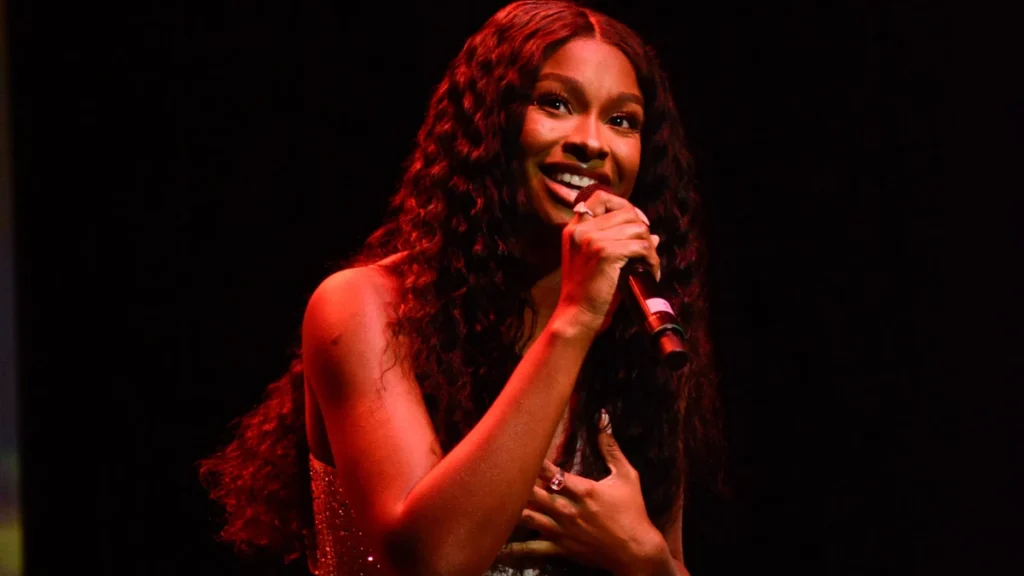
Coco Jones performing at the Essence Festival of Culture in 2025.
Coco Jones performing at the Essence Festival of Culture in 2025.
Third single of the year, released three weeks after the wedding it draws its footage from. Coco Jones Love Me Through went out on 21 August via High Standardz and Def Jam Recordings.
The release rate is the detail worth noting. Three singles in a calendar year, none of them attached to a new album, from an artist whose debut is barely a year old.
A Single Built Around a Private Event
The song pairs a melody-led arrangement with what the label’s announcement describes as rare intimate lyrics, quoting the line “Good, bad, and ugly / But he’s still gon’ love me”.
The accompanying visualiser uses footage from her wedding, which took place earlier in August. That is an unusually direct pairing of a personal event with a commercial release, and it removes any distance between the subject of the song and the artist’s own life.
The framing the label chose is about unconditional love across every side of a relationship, with the visual presented as a glimpse into a new chapter rather than as a conventional music video.
Three Singles, No Album
Love Me Through follows LUVAGIRL and Body So Tea, released earlier in the year. Together they form a run of standalone singles rather than an album campaign.
That is a deliberate structure. Releasing singles without an album keeps an artist continuously present on streaming platforms and playlists without committing to the long lead time and marketing spend a full record requires.
It also suits an artist consolidating after a successful debut. The label describes the run as an era built on self-love, confidence and vulnerability, which is a thematic through-line rather than a track listing.
The risk of the approach is that standalone singles rarely accumulate the way album tracks do. A song without a parent record has no context pulling listeners towards it once its playlist run ends, so its life is shorter unless something else sustains it.
In this case that something is the visual. A video carrying genuine personal footage gives the song a second reason to be shared, and sharing is the mechanism that extends a single beyond its initial placement.
Releasing three in a year also builds a body of material that can later be collected. Singles issued separately can be gathered into a project once there are enough of them, which keeps the option of an album open without committing to one now.
The Debut That Set the Baseline
Why Not More?, her debut album, is the reference point for everything that follows. According to the label it was the number one new R&B artist debut of 2025, number one for current R&B album sales, top three among current R&B albums and a top ten entry on the Billboard 200.
Those four positions describe the same thing from different angles: an album that led its genre and crossed into the main chart. A top ten Billboard 200 placing for a debut R&B record is not a routine result.
It also brought her eighth career Grammy nomination, which for an artist at this stage is a substantial tally and reflects work across music and screen rather than a single breakout.
The Deluxe Extended the Cycle
Before the new singles, the album received a deluxe edition, Why Not More? (MORE!), adding Other Side of Love with Alicia Keys.
A deluxe with a marquee feature is the standard way to extend an album’s chart life without releasing a new record, and it fits the same pattern as the singles that followed: keep the campaign alive, delay the next album.
A sold-out US and European tour ran alongside it, which is the part that converts chart position into durable audience. Streaming numbers measure attention; a sold-out room measures commitment.
What a Top Ten R&B Debut Actually Means
Contemporary R&B occupies an awkward position on the main album chart. The genre generates enormous streaming volume but converts it into album units less efficiently than pop or hip-hop, because listening is heavily concentrated in playlists rather than in full records.
A top ten Billboard 200 placing for a debut R&B album therefore represents more concentrated activity than the same position would for a pop record. The listeners are choosing the album, not encountering it.
The genre-specific rankings tell the same story from inside. Number one for current R&B album sales measures purchases rather than streams, which is the harder of the two figures to move and the one least susceptible to playlist placement.
Visibility Outside the Charts
Earlier in the year she performed Lift Every Voice and Sing at the Super Bowl, one of the largest television audiences available to any musician.
That kind of placement does something a single release cannot. It reaches an audience that is not looking for new music and would never encounter an R&B single through a playlist, and it converts a portion of them into listeners.
She has also released a mini-documentary series on YouTube and given an inside look at the wedding to a fashion title, which together form a wider media footprint than the music alone would generate.
That breadth is the practical advantage of an artist who came through acting before music. The audience arrives from several directions at once, and each route reaches people the others do not.
It also changes what a single has to do. When an artist is already visible, a release does not carry the whole burden of attracting attention; it converts attention that already exists into listening.
Why the Single Cadence Makes Sense
The commercial logic behind three standalone singles is straightforward once the streaming mechanics are accounted for. Individual tracks enter playlists on their own merits, and a playlist placement delivers listeners who were not seeking the artist out.
An album asks for a different behaviour, a decision to sit with a body of work, and that decision is made by an audience the artist already has. The conversion mechanism we examined in looking at how a stream actually becomes a chart position rewards both, but on very different timescales.
For an artist a year past a top ten debut, the singles route keeps the audience growing while the next album is written.
What to Watch Next
Two things. Whether a fourth single follows, which would confirm the run as a deliberate strategy rather than a gap-filler, and whether any of the three converts into a sustained chart presence rather than a release-week spike.
The wedding footage guarantees attention for this one. What it cannot guarantee is the second month, which is where a standalone single either establishes itself or disappears.
There is a third question underneath both. An artist who has already delivered a top ten debut, a Grammy-nominated album, a deluxe edition and a sold-out tour has largely exhausted the moves available before a second album. At some point the singles have to become a record.
The timing of that decision is the one genuinely consequential thing in this cycle. Release too early and the material is thin; leave it too long and the audience assembled by the debut has moved on.
Three singles, one Grammy-nominated debut, a top ten album and a video shot at her own wedding. The cadence is the story.
About The Author